In Murshidabad Explore this destination
Introduction
Tucked within the historic city of Murshidabad in West Bengal, the Nizamat Imambara stands as one of the largest and most magnificent imambaras in the world. A place of deep religious significance for the Shia Muslim community and an architectural marvel for heritage enthusiasts, this extraordinary monument draws visitors from across India and abroad every year. Whether you are a history lover, an architecture admirer, or a curious traveller exploring the tourist attractions in Murshidabad, the Nizamat Imambara offers a profoundly moving experience. This complete visitor guide covers everything you need to know — from its rich history and stunning design to Nizamat Imambara timings, entry fee, how to get there, and practical tips to make the most of your visit.
Overview of Nizamat Imambara
The Nizamat Imambara, also known as the Imambara of the Nizamat or the Imambara of Murshidabad, is located within the Nizamat Kila (Nizamat Fort) complex on the eastern bank of the Bhagirathi River. It is the official residence and estate of the Nawabs of Bengal, and the imambara forms the centrepiece of this historic compound. This is not merely a religious building — it is a living symbol of Bengal’s Nawabi heritage, its syncretic cultural traditions, and the enduring legacy of Shia Muslim devotion in the subcontinent.
Nizamat Imambara – History and Cultural Significance
Origins and the Nawabs of Bengal
The history of Nizamat Imambara Murshidabad is inseparable from the history of Bengal’s Nawabs. Murshidabad served as the capital of the Nawabs of Bengal, Bihar, and Orissa from the early 18th century. The original imambara on this site was built during the time of the Nawabs, who were patrons of Shia Islamic culture and traditions. The present structure of the Nizamat Imambara was built in 1847 by Nawab Nazim Feradun Jah, following a devastating fire that destroyed the earlier imambara. The reconstruction was a monumental undertaking, and the resulting building became one of the grandest imambaras ever built in South Asia.
Religious and Cultural Importance
An imambara is a congregation hall used by Shia Muslims, primarily during the month of Muharram, to commemorate the martyrdom of Imam Hussain at the Battle of Karbala. The Nizamat Imambara is the focal point of Muharram observances in Murshidabad, a tradition that has continued uninterrupted for centuries. The imambara houses some of the most revered tazias (replicas of the tomb of Imam Hussain) in India, several of which are over a hundred years old. During Muharram, thousands of devotees gather here in an atmosphere of profound solemnity and collective mourning.
Architecture of Nizamat Imambara
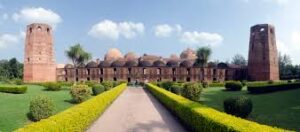
The Nizamat Imambara is an outstanding example of Indo-Saracenic architecture, blending Mughal, Gothic, and European colonial styles in a way that is entirely unique.
Key Architectural Features
- Central Dome – The imambara is crowned by a large central dome flanked by two tall minarets, creating a silhouette reminiscent of the grand mosques of the Mughal era
- Scale and Grandeur – The main hall is vast enough to accommodate thousands of worshippers and visitors simultaneously
- Facade – The exterior features intricately detailed arched gateways, ornamental plasterwork, and a symmetrical layout that conveys a sense of regal authority
- Italian Chandeliers – The interior is adorned with enormous European chandeliers, many of them imported from Italy, which bathe the space in warm, golden light
- Tazia Collection – The imambara houses an extraordinary collection of antique tazias, some made of silver, gold, and precious metals, displayed within the complex
The combination of European decorative elements with traditional Islamic architectural forms makes the Nizamat Imambara a truly one-of-a-kind structure in India.
Nizamat Imambara Timings
Visitors planning a trip to the Nizamat Imambara should note the following general timings. It is always advisable to confirm the current schedule with local tourism authorities before visiting, as timings may vary during religious occasions such as Muharram.
| Day | Opening Time | Closing Time |
| Saturday to Thursday | 10:00 AM | 5:00 PM |
| Friday | Closed / Limited Access |
Note: The imambara may have restricted or no public access during Muharram observances or on specific religious days. Plan your visit accordingly.
Nizamat Imambara Entry Fee
The Nizamat Imambara entry fee is modest, making it accessible to all visitors. The Nizamat Kila complex, within which the imambara is located, charges a nominal admission fee for Indian and foreign nationals.
- Indian Nationals: Approximately ₹10 – ₹20 per person
- Foreign Nationals: Approximately ₹100 – ₹200 per person
- Children (below 15 years): Generally free or at a reduced rate
Fees are subject to revision by the relevant authorities. Always check current rates at the entry gate or through the Archaeological Survey of India (ASI) or West Bengal Tourism.
Best Time to Visit Nizamat Imambara
By Season
- October to March – This is the most comfortable time to visit Murshidabad. The weather is cool and pleasant, making it ideal for sightseeing and heritage walks through the city.
- April to June – Summers in Murshidabad are hot and humid. Visiting early in the morning is recommended if you choose this period.
- July to September – The monsoon brings heavy rainfall. While the landscape turns lush and green, outdoor exploration can be challenging.
During Muharram
If you wish to witness the religious traditions of the imambara, visiting during Muharram is a unique cultural experience. However, be aware that the site becomes extremely crowded and certain areas may be restricted to non-Muslim visitors out of respect for the proceedings.
How to Reach Nizamat Imambara
By Train
The most convenient way to reach Murshidabad is by train. The nearest railway station is Berhampore Court or Murshidabad Railway Station, both of which are well connected to Kolkata and other major cities in West Bengal. From the station, the imambara is accessible by auto-rickshaw or cycle-rickshaw.
Conclusion
It stands as a grand symbol of Murshidabad’s religious and architectural heritage. Its impressive structure, historical importance, and spiritual atmosphere make it a must-visit attraction for travelers exploring the Nawabi capital of Bengal. A visit to Nizamat Imambara offers both cultural insight and a memorable historical experience.
By Road
Murshidabad is approximately 200 kilometres north of Kolkata. Regular bus services operate from Kolkata’s Esplanade and Ultadanga bus terminals. Private taxis and hired vehicles are a more comfortable option for families and groups.
By Air
The nearest airport is Netaji Subhas Chandra Bose International Airport in Kolkata, approximately 215 kilometres away. From Kolkata, travellers can proceed by train or road.
Nearby Attractions in Murshidabad
A visit to the Nizamat Imambara pairs wonderfully with other tourist attractions in Murshidabad:
- Hazarduari Palace – The iconic 1,000-door palace located within the same Nizamat Kila complex; home to a world-class museum of Nawabi artefacts
- Moti Jheel (Pearl Lake) – A serene lake adjacent to the palace complex, ideal for a quiet evening stroll
- Katra Mosque – Built by Murshid Quli Khan, the founder of Murshidabad; his tomb lies beneath the mosque’s steps
- Nashipur Rajbari – A historic royal residence with an interesting collection of antiques and artwork
Jafragan Ganj – The historic marketplace area offering local handicrafts, textiles, and traditional silk products for which Murshidabad is famous.
Practical Tips for Visiting Nizamat Imambara
- Dress modestly – As a place of active religious significance, cover your shoulders and legs, and remove footwear before entering the main hall
- Photography – Check with staff on the day of your visit; photography rules may vary for different sections of the complex
- Guided tours – Local guides are available near the Hazarduari Palace complex and can offer invaluable historical context for both the palace and the imambara
- Combine with Hazarduari – The Nizamat Imambara and Hazarduari Palace are located within the same compound, so plan to visit both in a single day
Carry cash – Smaller denomination notes are useful for entry fees, rickshaw rides, and local snacks.
The Nizamat Imambara is far more than a monument — it is a living testament to Bengal’s Nawabi legacy, a centre of Shia devotion, and one of the most architecturally arresting buildings in eastern India. Whether you arrive during the solemnity of Muharram or on a peaceful winter morning, the imambara’s grandeur and historical depth leave a lasting impression on every visitor. If you are planning a heritage tour of West Bengal, Nizamat Imambara Murshidabad deserves a prominent place on your itinerary. Pair it with the treasures of Hazarduari Palace, the old silk markets, and the riverside ghats of the Bhagirathi, and you have the ingredients for an unforgettable journey into one of India’s most storied cities.
Frequently Asked Questions (FAQs)
1. What are the Nizamat Imambara timings for visitors?
The Nizamat Imambara is generally open from 10:00 AM to 5:00 PM, Saturday through Thursday. It is typically closed or has limited access on Fridays. Timings may vary during Muharram and other religious observances, so it is advisable to confirm locally before your visit.
2. What is the entry fee for Nizamat Imambara?
The entry fee is nominal. Indian nationals are charged approximately ₹10–₹20, while foreign nationals pay around ₹100–₹200. Children below 15 years may enter free or at a reduced rate. The Nizamat Imambara is part of the Nizamat Kila complex, which also includes Hazarduari Palace.
3. Where is Nizamat Imambara located?
The Nizamat Imambara is located in Murshidabad, West Bengal, within the Nizamat Kila (Nizamat Fort) complex on the eastern bank of the Bhagirathi River. It is approximately 200 km north of Kolkata.
4. Can non-Muslims visit Nizamat Imambara?
Yes, the Nizamat Imambara is open to visitors of all faiths during regular visiting hours. Visitors are expected to dress modestly and behave respectfully, as it is an active place of religious worship. During Muharram, some areas may be restricted out of respect for religious proceedings.
5. What is the best time of year to visit Nizamat Imambara?
The best time to visit is between October and March, when Murshidabad’s weather is cool and pleasant. This period is ideal for exploring the city’s many heritage sites comfortably. If you wish to experience the religious traditions of the imambara, plan your visit during the month of Muharram, keeping in mind that the site will be significantly more crowded.