Why Assam Deserves a Place on Your Travel Map
Tucked into the northeastern corner of India, Assam is one of the country’s most culturally layered and naturally spectacular states. It is a land where ancient tribal traditions exist alongside tea-estate elegance, where wild elephants roam near national highways, and where the food on your plate tells a story of rivers, forests, and centuries of local knowledge.
Assamese culture and cuisine are deeply interwoven you cannot truly understand one without experiencing the other. The lifestyle here is rooted in nature, community, and a deep respect for heritage that shows up in everything from the way people dress to the way they set a table.
This Assam travel guide covers everything a first-time visitor needs: the cultural context, the must-eat dishes, what to pack, when to go, and how to make the most of every moment in this extraordinary part of Northeast India.
Overview of Assam: India’s Northeast Jewel
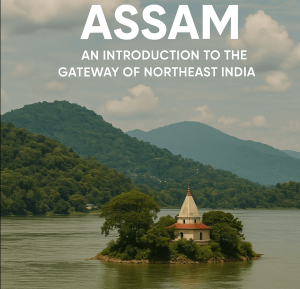
Assam sits in the Brahmaputra river valley, flanked by Bhutan and Arunachal Pradesh to the north, Nagaland and Manipur to the east, Meghalaya and Bangladesh to the south, and West Bengal to the west. It serves as the gateway to all of Northeast India and for many travellers, it becomes the destination itself.
The state is home to over 30 million people from a remarkable mix of ethnic groups, tribes, and communities. Bodo, Mising, Karbi, Dimasa, and dozens of other indigenous communities coexist alongside Bengali, Nepali, and mainstream Assamese populations creating a cultural diversity that is visible in everything from local festivals to the contents of a market stall.
Assam’s economy has historically been shaped by tea, oil, and silk. Its tea gardens alone account for over 50% of India’s total tea production and walking through one of these estates, rows of perfectly trimmed bushes stretching to the horizon, is an experience unique to this part of the world.
Assamese Culture and Traditions
Traditional Lifestyle and Values
The traditional Assamese lifestyle is built on simplicity, community, and a strong connection to the natural world. Most Assamese households observe a rhythmic daily life tied to seasonal changes planting, harvesting, fishing, and weaving form the backbone of rural life across the state.
Hospitality is a cornerstone of Assam local culture. Guests are welcomed with tamul-pan (betel nut and betel leaf) a custom that carries deep social significance and is offered as a mark of respect and warmth. Refusing it gently is acceptable for visitors, but acknowledging the gesture is appreciated.
Traditional Attire: The Mekhela Chador
The Mekhela Chador is the traditional two-piece garment worn by Assamese women and is one of the most elegant pieces of traditional textile craft in India. Woven from Muga silk (golden silk unique to Assam), Pat silk, or cotton, these garments feature intricate motifs inspired by nature peacocks, elephants, lotus flowers, and geometric patterns.
Muga silk is exclusive to Assam and is considered one of the finest natural silks in the world. Buying a piece of authentic Muga or Eri silk from a local weaver is one of the most meaningful souvenirs you can bring home from the state.
Festivals of Assam: Bihu and Beyond
Bihu is not just a festival it is the soul of Assamese identity. Celebrated three times a year, it marks the key agricultural transitions of the Assamese calendar. Rongali Bihu (April) is the most exuberant a spring harvest celebration marked by energetic Bihu dance, Bihu songs, feasting, and community gatherings that last for days.
- Rongali Bihu (April): The spring festival, also known as Bohag Bihu the most celebrated of the three, welcoming the Assamese New Year
- Kongali Bihu (October): The autumn festival, a more solemn occasion of prayers and lit earthen lamps, reflecting on the harvest season ahead
- Bhogali Bihu (January): The winter harvest festival, marked by community feasts, bonfires, and the preparation of traditional rice delicacies
Other important local festivals of Assam include Ambubachi Mela at Kamakhya Temple (one of India’s most powerful Shakti shrines), Ali-Aye-Ligang (the Mising tribal spring festival), and Dehing Patkai Festival celebrating the state’s natural and cultural heritage.
Assamese Cuisine: A Food Guide for Visitors
Assamese food is one of India’s most distinct and underappreciated regional cuisines. It is characterised by light cooking methods, minimal use of spices, and a heavy reliance on fresh herbs, mustard oil, and fermented ingredients. The result is food that is clean, aromatic, and surprisingly complex in flavour.
A) Popular Assamese Dishes
- Masor Tenga (Sour Fish Curry): The defining dish of Assamese cuisine — fish cooked in a tangy broth with tomatoes or outenga (elephant apple). Light, refreshing, and uniquely Assamese.
- Khar: A one-of-a-kind alkaline preparation made using raw papaya, pulses, or fish cooked with filtered banana-peel ash water. It is traditionally eaten at the start of a meal and has no real equivalent anywhere else in Indian cooking.
- Pitika: A category of mashed preparations most commonly aloo pitika (mashed potato with mustard oil, green chilli, and coriander) or fish pitika. Simple, deeply flavourful, and eaten alongside rice.
- Duck Meat Curry: Duck cooked with ash gourd or bottle gourd is a festive staple, particularly popular during Bihu celebrations.
- Bamboo Shoot Dishes: Fermented bamboo shoot (khorisa) is used extensively in Assamese cooking in curries, with pork, and as a condiment. It has a pungent, earthy flavour that is instantly addictive.
B) Famous Assamese Sweets and Snacks
- Til Pitha: Thin rice flour crepes rolled around a filling of sesame seeds and jaggery a Bhogali Bihu speciality.
- Ghila Pitha: Fried rice flour cakes sweetened with jaggery, crispy on the outside and soft within.
- Narikolor Laru: Coconut balls made with jaggery a festival sweet found across the state.
- Sunga Pitha: Rice and coconut cooked inside a bamboo tube over an open fire one of the most unique cooking methods in Northeast India.
C) Food Experiences for Tourists
- Visit a traditional Assamese thali restaurant in Guwahati places like Khorikaa or Srimanta Sankardev Kalakshetra’s cultural food stalls offer authentic meals
- Try fresh Assam CTC and orthodox tea directly at a tea estate many welcome visitors for a tasting session
- Sample local street food at Fancy Bazar and Paltan Bazar markets in Guwahati
- Look out for rice beer (Apong) during tribal festivals a traditional fermented drink offered as a gesture of hospitality
What to Pack for an Assam Trip
| Season | Clothing | Essentials |
| Oct – Feb (Winter) | Light woolens, layered clothing, warm jacket for evenings | Scarf, warm socks, lip balm |
| Mar – May (Spring) | Lightweight cottons, breathable fabrics, sun hat | Sunscreen, sunglasses, water bottle |
| Jun – Sep (Monsoon) | Quick-dry fabrics, rain jacket, waterproof sandals | Compact umbrella, waterproof bag cover, insect repellent |
Year-Round Packing Essentials
- Documents: Valid ID proof (Aadhaar / Passport), Inner Line Permit (ILP) if travelling beyond Assam into Arunachal Pradesh or Nagaland, and copies of hotel bookings
- Medicines: Anti-malarial tablets (consult your doctor), antihistamines, ORS sachets, a basic first-aid kit, and any personal prescription medication
- Footwear: Sturdy walking shoes for wildlife parks, comfortable sandals for city exploration, and waterproof footwear during monsoon
- Electronics: Power bank (connectivity can be patchy in forest areas), universal adapter, and a good camera with zoom for wildlife photography
- Modest clothing: Carry at least one set of respectful, modest clothing for temple visits — shoulders and knees should be covered at religious sites
Best Time to Visit Assam
- November to April (Best Overall): The ideal travel window. Weather is cool, dry, and comfortable. Kaziranga’s grasslands are accessible for rhino safaris, Bihu festivities peak in April, and the tea estates begin their harvest cycle.
- February to April (Wildlife Peak): The absolute best period for Kaziranga National Park. Tall elephant grass is cut back, making animal sightings significantly easier.
- June to September (Monsoon): Heavy rainfall brings the Brahmaputra to flood levels and Kaziranga partially closes. However, the landscape is dramatically green, river islands (chapories) come alive with migratory birds, and tourist crowds drop entirely.
If you can only choose one month: go in March. The weather is perfect, the rhinos are visible at Kaziranga, the tea estates are beginning their first flush, and Rongali Bihu preparations fill every town with colour and energy.
Things to Do in Assam
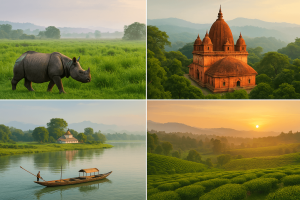
- Jeep and elephant safari at Kaziranga National Park: Home to two-thirds of the world’s one-horned rhinoceros population, Kaziranga is a UNESCO World Heritage Site and one of India’s greatest wildlife experiences. Check wildlife destinations in India for a full comparison guide.
- Walk through a working tea estate: Estates around Jorhat, Dibrugarh, and Tezpur welcome visitors. Watching the tea plucking process and tasting fresh brew straight from the factory is a sensory highlight of any Assam trip.
- Visit Kamakhya Temple, Guwahati: One of the most powerful Shakti temples in India, perched on Nilachal Hill with sweeping views of the Brahmaputra.
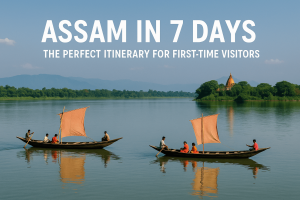
- River cruise on the Brahmaputra: A sunset cruise from Guwahati’s Umananda Ghat offers one of the most serene experiences in Northeast India travel.
- Explore Majuli Island: The world’s largest river island, accessible by ferry from Jorhat. A living centre of neo-Vaishnavite Assamese culture, satras (monasteries), mask-making traditions, and tribal lifestyles.
- Explore top tourist places in Assam: Our complete Assam tourism guide covers Manas National Park, the Sivasagar ruins, Haflong hill station, and Dibru-Saikhowa National Park.
Travel Tips for Visiting Assam
Safety
- Assam is generally safe for tourists. Guwahati and major tourist circuits are well-served by police and tourism infrastructure
- Avoid remote border areas without a local guide or prior clearance
- Inform your accommodation if you plan overnight stays in forest areas
Getting Around
- By Air: Lokpriya Gopinath Bordoloi International Airport in Guwahati connects to all major Indian cities. Dibrugarh and Jorhat also have domestic airports.
- By Train: The railway network covers most of Assam’s major towns. The Rajdhani and Shatabdi trains connect Guwahati to Delhi, Kolkata, and Mumbai.
- Local: Hire a private cab for inter-city travel it offers the most flexibility and comfort for visiting multiple destinations. Shared sumos (jeeps) run between towns and are extremely affordable.
Local Etiquette
- Accept tamul-pan (betel nut) graciously it is offered as a sign of respect
- Remove footwear before entering homes, satras (monasteries), and temples
- Photography at Kamakhya Temple and certain tribal areas may be restricted always ask before raising a camera
- Learning a few Assamese words ‘Namaskar’ (hello/greeting), ‘Dhanyabaad’ (thank you) is warmly appreciated by locals
Plan Your Complete Assam Trip
Ready to take the next step? Here are resources to help you plan every aspect of your Assam journey:
- Destinations: Explore top tourist places in Assam — from Kaziranga and Majuli to Tawang and Haflong, our destination guides cover every corner of the state.
- Regional Context: Read our Northeast India travel guide for a broader look at Meghalaya, Arunachal Pradesh, Nagaland, and how to build a multi-state itinerary.
- Wildlife: Check wildlife destinations in India to compare Kaziranga with Jim Corbett, Ranthambhore, and the Sundarbans.
Frequently Asked Questions (FAQ) – Assam Travel
Q1. What is Assamese culture known for?
Assamese culture is known for its Bihu festivals, traditional Mekhela Chador silk weaving, Sattriya dance (a classical dance form originating from Vaishnavite monasteries), warm hospitality, and a deep connection to the Brahmaputra river and its natural landscape.
Q2. What food is famous in Assam?
Assam’s most famous dishes include Masor Tenga (sour fish curry), Khar (alkaline preparation), Duck Meat Curry, Bamboo Shoot Pork Curry, and Til Pitha (sesame rice crepe). Assam tea — both CTC and orthodox varieties — is among the most celebrated in the world.
Q3. What should I pack for an Assam trip?
Pack light cotton or quick-dry clothing, insect repellent, sturdy walking shoes, a rain jacket (year-round), sunscreen, a first-aid kit, anti-malarial tablets (if visiting forest areas), valid ID proof, and modest clothing for temple visits. A power bank and zoom camera are recommended for wildlife safaris.
Q4. Is Assam safe for tourists?
Yes. Assam is safe for tourists, including solo and female travellers, on the main tourist circuits (Guwahati, Kaziranga, Jorhat, Majuli, Tezpur). Standard travel precautions apply. Avoid remote border areas without local guidance.
Q5. What is the best time to visit Assam?
November to April is the best time to visit Assam. The ideal months are February to April for wildlife safaris at Kaziranga, and October to November for a quieter, post-monsoon experience with lush landscapes and fewer crowds.
Q6. What is the famous silk of Assam?
Assam produces three unique silks: Muga (golden silk, exclusive to Assam), Pat (white/cream silk used in Mekhela Chadors), and Eri (soft, woolly silk used in shawls). All three are handwoven by traditional artisans and are among the finest textiles in India.
Q7. Do I need a permit to visit Assam?
No permit is required for Indian nationals to visit Assam itself. However, an Inner Line Permit (ILP) is required if you plan to cross into neighbouring states like Arunachal Pradesh, Nagaland, or Mizoram. Foreign nationals should check the latest Protected Area Permit (PAP) requirements before travel.
Assam Is Waiting — And It Is Worth Every Step
Assam is the kind of destination that reveals itself slowly. The more time you give it, the more it gives back. Its culture is not performed for tourists it is lived daily, in the way meals are cooked, festivals are celebrated, and guests are welcomed. Its food is not just delicious it is a direct expression of the landscape that surrounds it. Whether you come for the rhinos, the tea, the silk, the festivals, or simply the experience of standing beside the mighty Brahmaputra as the sun sets behind the Assam hills you will leave changed in some quiet, lasting way.