In Meghalaya Explore this destination
Introduction
The Double Decker Living Root Bridge is one of Meghalaya’s prized attractions, drawing nature-loving visitors who want to trek a forested path, cross living root bridges and view the lovely Khasi hills.
Your journey to see this living work of art is anything but easy-going – it includes a long descent, hundreds of steps, a couple bridges, and a steep climb back up! The trek can be a fun part of your Meghalaya trip if you put in extra time and preparation. The following points will help you prepare accordingly.
About the Double Decker Living Root Bridge
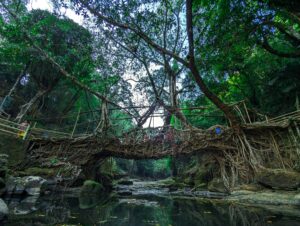
The Double Decker Living Root Bridge is located in the Nongriat village in the East Khasi Hills district in Meghalaya. This double deck bridge is made from intertwined aerial roots of the rubber fig tree.
They were guided and trained by the local Khasi residents who lead their families with a long tradition of living closely connected to the forest. Unlike most bridges built for convenience, it’s a living work of art made up of a combination of natural materials and human effort.
The bridge spans a forest that includes waterfalls, streams, and natural pools, though swimming tends only to be safe on specific days.
The trek to Nongriat – What to Expect
The typical journey begins from the Tyrna village, where you’ll need to find a place to park your vehicle and prepare to descend the path to Nongriat.
Start: Tyrna village, near Cherrapunji.
Steps: Travel guides commonly estimate around 3,000 to 3,500 steps on the way down, though it may vary.
Trail: Steep stone steps, narrow areas, forested paths, and bridges.
Bridges: There are iron bridges over streams along the trail.
Downhill and Return: The journey downhill is only half the battle – you’ll need to climb back up the trail to TYrtna (unless you’ve prepared to stay overnight).
A one-way journey takes anywhere between two to three hours on average – and that’s not including the time it takes to climb back up and explore the bridge. You’ll want plenty of extra time to account for the return journey.
Things to see along the Way
The trail itself is quite something, so don’t feel overwhelmed if it doesn’t match up to a scenic walk you might have at an amusement park. You’ll weave through the forest, occasionally hear streams babbling alongside the trail.
Shops: You may find shops selling water, drinks and some refreshments along the way.
Smaller Root Bridges: Some people like to see the smaller root bridges on the wider trekking routes.
Nongriat village: There’s always the village to appreciate.
Forest & Streams: Nature lovers should love the chance to trek this trail filled with forests and streams.
Take breaks when you need to as you hike down the mountain, and remember to hydrate well. Don’t risk trying to race down the steep steps – a slow steady pace beats a fast sprint any day.
Getting to the Double Decker Bridge
Once you reach Nongriat, follow the on-site directions to the Double Decker Living Root Bridge. You’ll find the bridge has two levels to view and appreciate, with the top one being a nice picture-taking location.
Walk across the root bridge and follow any local guidelines.
Take in the details and the beautiful roots that have been guided along to shape this amazing structure.
Enjoy your views of the forest and the streams while you have the opportunity.
Swim or explore nearby water areas if the conditions are safe and allowed.
Some visitors will try to enjoy a swim in a natural pool after touring the bridge. However, the depth and conditions can vary, and it’s not recommended to explore water areas during or after heavy rains.
How difficult is the trek?
The Double Decker Living Root Bridge trek is a tough one for most, due primarily to the steep slope you need to conquer to get to the bridge, and the steep climb back up to Tyrna to return. It’s best suited for outdoor adventure types with good stamina.
Fitness: Good stamina and strong legs will help you make it to the village and back.
Steps: Steep steps are a big part of the trail with the potential to be slippery.
Rain: Rainy days can make steps and other parts of the trail very slippery.
Heights: The trail includes bridges that can be scary if you have a fear of heights.
Health & Mobility: This trail is not suitable for people with significant mobility issues. If you have heart issues, knee issues, or balance issues consult your physician to determine if this trek is right for you.
If you’re not accustomed to long walks or lengthy steps, you should build up your fitness before embarking on this adventure. Don’t think about this as a casual sightseeing experience, and instead, get serious about preparing your body to conquer this challenge with you.
Busiest Times on the Trail
How busy the trail is can vary based on the time of year, as well as the day of the week.
Weekdays: May tend to be less busy than weekends but aren’t necessarily always the case.
Weekends & Holidays: You should always expect the trail, bridges, and village to be busy during these times.
Early Starts: Getting an early start gives more breathing room as you make your journey to Nongriat.
An early start to your day is a good idea because the extra time you’ll have can help you navigate the busy trail conditions without rushing. Rather than racing against time or other hikers, you can pace yourself and make the best time for you.
Opening Hours & Timing
The trek doesn’t have a traditional set opening hour or ticket counter – and local conditions can vary, so make sure to get your current conditions before heading out on your adventure.
Start early in the morning to ensure you’re able to see the bridge and return before dark.
Avoid late departures if you want to make it all the way back to Tyrna before nightfall.
You’ll need to factor extra time for rain, breaks, and pictures, along with the busy trail and bridge conditions.
If you’re planning to stay overnight in Nongriat, be sure to book the necessary accommodations ahead of time and be aware of the local trail conditions.
Do don’t assume the trail will be safe to hike in the dark. If you find out your pace is too slow, always prioritize your safety over visiting every sight.
Best Time of Year to Visit
The best time of year to visit this attraction depends on your personal preferences, and if you prefer somewhat dry steps or the lush greenery of the area that the rainy season brings.
October – April: This is preferred by many based on mostly dry conditions throughout the region, though there may still be the occasional rain shower.
Monsoon: The entire region becomes incredibly green and lush, though the trails and steps can become quite slippery.
Heavy Rain Days: Always avoid the trail on days when there is a heavy rain warning, or if streams are dangerous to cross.
Always check the local forecast on your date of arrival, as conditions can tend to change quite a bit in the mountainous region. Remember that a picture of the beautiful landscapes isn’t worth risking your safety trying to get.
Things to Pack for the Trek
Trekking shoes with good traction
Enough drinking water, and some high-energy, easy-to-carry snacks.
Cash for any purchases or applicable entry fees.
A light rain jacket or waterproof layer.
A small backpack to carry your items with free hands on the trail.
Swim shorts, towel, and swimsuit if you intend to swim in a permitted area (weather and condition permitting).
A charged phone and any essential personal medications.
Hire a local guide if you’re unfamiliar with the area, or if you want to explore beyond the main sight. Always listen to local instructions regarding weather and water safety.
A Typical Day to See the Bridge
If you’ve decided to visit the Double Decker Living Root Bridge and return the same day, keep the following in mind:
Early Morning: Arrive at Tyrna and prepare for the day ahead.
Late Morning: Arrive at Nongriat after a long trek and have some well-deserved rest along with exploring the village and bridge.
Midday: Grab a small snack, take some pictures, and enjoy the scenery with some extra time to recover.
Afternoon: Begin your return journey with enough daylight to avoid dark conditions.
Evening: Arrive back at Tyrna and continue on with your journey if you’re not too tired for the conditions and lighting.
Your day will vary based on your fitness level, the weather, and the amount of free time you have to get to the bridge. Avoid trying to make other travel arrangements for the same evening.
Staying Overnight in Nongriat
Some visitors like to make it a full-day adventure by staying overnight in Nongriat. Local options may be available, but facilities can be quite limited so consider making a reservation beforehand if possible.
An overnight visit to Nongriat means you have the ability to explore much more of the area. One popular option is to visit Rainbow Falls, which is worth your time if you have the additional space in your travel plans and the conditions are safe. The Rainbow Falls trek beyond the Double Decker Living Root Bridge is long, so you’d need to ensure enough good weather and fitness on the day of your extended adventure.
Other Things To Do
Rainbow Falls: One of the region’s most impressive waterfalls reached by a long trekking adventure from Nongriat. You should always have extra time on your itinerary when visiting this attraction, as it takes a substantial amount of walking to get there. Be sure to check weather and trail conditions first before embarking.
Smaller Living Root Bridges: Along with the larger Double Decker Living Root Bridge, you may see smaller root bridges along the long trekking adventure.
Nongriat village: Take in the beauty of the village and enjoy the area.
Mawsmai Cave: If you’re looking for other nature-based attractions while in the Cherrapunji area, make sure to check out our Mawsmai Cave visitor guide for another fun stop to add to your trip in a different area.
Do don’t try to cram everything in without factoring driving time, treks, and weather into your day of adventure.
For more general information, and government-issued resources for Meghalaya, please visit the Meghalaya Government website .
Who Should Consider This Trek?
Adventure seekers
Nature lovers seeking something incredible while trekking the trails.
Photography enthusiasts who have the time to capture this rare sight.
People who have the time and energy to hike down, and all the way back up, the long trail.
This sight is definitely not for those looking for a short and easy trekking experience from a local parking area. Always consider your fitness level and the time it takes for this journey.
Selling Points of This Place + Things to Consider
What makes it worth it:
amazing sight of a natural wonder built from tree roots guided along by the Khasi locals.
Beautiful forested environments and streams along the trail.
fun, and challenging trekking experience in Meghalaya.
The opportunity to explore Nongriat and any additional trails or sights nearby.
Things to consider:
The steep steps can prove difficult for some people to climb up and down.
The trail can become quite slippery during monsoon season or rainy days.
Cell reception may be limited, and there may be few refreshments available at some points.
Swimming and extra trekking can depend on the weather and require a good amount of caution to stay safe.
Frequently Asked Questions
How many steps are there to the Double Decker Living Root Bridge?
Travel guides commonly estimate around 3,000 – 3,500 steps on the descent to the bridge. You’ll always need to climb back up whatever route you take to get there, including many steps.
How long does the trek take?
The one-way trek to the Double Decker Living Root Bridge can take around two to three hours on average, and longer if you want to explore. Make sure to factor in extra exploration time and any time needed to climb back up.
Is the trek suitable for children?
The long and steep nature of the trail can sometimes be too much for children, so make sure they’re fit enough for the adventure, and the trail conditions are right too.
When is the best time to visit?
October – April tend to be the preferred months for visiting this attraction for most visitors, due to the mostly dry conditions across the region. The monsoon brings incredible greenery but also very challenging steps and streams that can be slippery or dangerous.
Can I stay overnight in Nongriat?
You may have a few local homestays to choose from, but make sure to research any accommodation and its facilities before deciding if it’s right for you.
Can I visit Rainbow Falls on the same trip?
Some trekkers will plan to combine Rainbow Falls with a night spent in Nongriat, but it’s a good idea to always double-check the conditions before embarking. It’s a long and challenging trek beyond the Double Decker Living Root Bridge that means you should always consider an overnight stay in Nongriat to make it worthwhile. Make sure the day is good for weather and trail conditions before you head out on your adventure.
Conclusion
The Double Decker Living Root Bridge is one of Meghalaya’s most sought-after trekking sights, offering up an incredible structure of living roots alongside the challenging trail. Your journey will need to factor in extra hours to conquer the steep steps and make it back up to Tyrna.
Make sure to prepare well for the trek, give yourself extra room to explore, and enjoy the amazing opportunity if you love nature and adventure in the mountains of Meghalaya.