In Meghalaya Explore this destination
If you are exploring Mawlynnong in Meghalaya, the Riwai Living Root Bridge is one such hidden gem that you could consider adding to your bucket list. While at first glance it seems like just another bridge, looking closer will reveal the tree roots that helped build it. The following covers how far you have to walk, entry fees, best time to visit, and more!
About Riwai Living Root Bridge
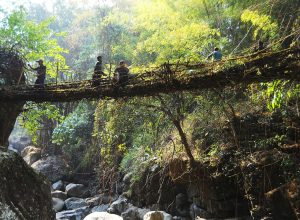
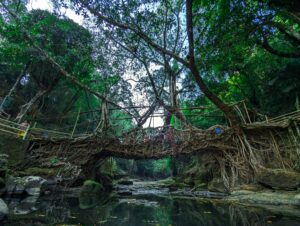
The Riwai Living Root Bridge is located in the Riwai village, near Mawlynnong in East Khasi Hills district of Meghalaya. As the name suggests, this is not a regular bridge made of either concrete or wood. Instead these living root bridges are grown by guiding the roots of the rubber fig tree into the desired pattern to form bridges over streams.
As per local folklore, these bridges in Meghalaya could be hundreds of years old! These are examples of the wisdom and innovation of the local people who helped grow these tree root bridges.
Riwai Living Bridge is one of the easiest living root bridges to visit in Meghalaya. For someone looking to explore the unique features of the region but do not want to do long treks, this could be a good option.
The Walk to the Bridge
The walk to this living root bridge starts from the parking area or the drop-off point. This is not very far, but how steep the walk is would depend on the trail that you take.
- Walk to bridge: While it is not very long, the walk could take longer if you are tired or need to rest. You also might need to walk down some steps to get to the bridge and the stream below. It might also be slippery at some points, especially after rains.
- Pace yourself: Try and save some energy for the walk back. If you have elderly folks or kids with you, you might want to ask them to take their time as well. After rains, the steps and tree roots could also be slippery.
Entry Fee and Timings
A you may need to pay a local entry or maintenance fee. As per some people who have visited Riwai Living Bridge, the entry fee per person was somewhere around ₹20-30, but this could vary. Always carry some cash with you as the entry fee may only be accepted in cash and there may not be other payment options available.
- Entry fee: Check with locals for the latest entry fee. You may also want to carry cash with you for any other purchases.
- Timings: While the bridge can be visited during daylight hours, the timings may vary depending on the day.
- Booking: You may not need to book in advance for a regular visit, but if you are visiting with a large group you may want to ask locals for any specific guidance.
It always good to double check the entry fee and other guidelines on the day of your visit rather than relying only on internet information.
What to Expect at Riwai Living Root Bridge
While the living root bridge is the main attraction, there are a few things that you could look out for at Riwai Living Bridge.
- The living root bridge: This is definitely the star attraction at this location, so do not forget to take pictures! While the roots have been woven to create this interesting pattern, it is best to avoid climbing on to them as well as running for safety reasons.
- The stream: You will see a stream below the bridge, but how full or empty it is would depend on the season.
- Forest view: The trees and the surrounding greenery are also worth taking pictures of!
- Stalls: You may also find some stalls selling local snacks, fruits and souvenirs depending on the day.
Most visitors spend some time walking across the living root bridge, taking pictures, and relaxing in the scenic view. It is best to avoid stepping on the roots unnecessarily and follow any guidelines provided by locals.
How Crowded is it?
As this is a popular tourist attraction near Mawlynnong, it is always a good idea to keep in mind how busy it could be.
- Early mornings: These are usually the best times to visit if you want to avoid crowds and have a good photo shoot!
- Late mornings: These are usually the busiest times as most day visitors tend to reach the area by then.
- Weekends and holidays: You may want to plan your visit for weekdays if possible as the weekends and public holidays could be busier than other days. It may also be a good idea to avoid the monsoon season if you want to avoid large crowds.
- Monsoon season: While the region looks incredibly scenic during this time of the year, the steps and tree roots could be slippery after rains which could make it unsafe.
If if you want to avoid crowds, it may be a good idea to visit this living root bridge during weekdays and early mornings. These are general observations, so it may vary depending on the day and the season as well.
Best Time to Visit Riwai Living Root Bridge
The best time to visit would depend on a variety of factors including the weather and how comfortable you are with steep walks.
- October to April: These are usually preferable months to visit the region as the weather tends to be pleasant.
- Early mornings: Early mornings tend to be less crowded and are great times for photography.
- Monsoon season: While the region is at its greenest during this time of the year, the roots and steps could be slippery which makes it unsafe.
Always check the weather forecast before heading out. If there have been recent rains, you may want to avoid visiting the living root bridge unless you want to postpone your visit.
Other Things to Note
The following are some important things to note before visiting Riwai Living Root Bridge:
- Wear comfortable and sturdy clothes and shoes.
- Always be cautious when walking on the stones and tree roots.
- Do do not run on the roots as it could be dangerous.
- Always carry cash with you in case you need to pay any entry or maintenance fee.
- It may be a good idea to carry your own drinking water, especially if you are visiting multiple attractions in a day.
- Do not litter or harm the local environment.
- Always ask for permission before clicking pictures of the locals.
- Follow any rules and directions provided by the locals.
A Sample Mawlynnong and Dawki Itinerary
If you are looking to plan a day trip from Shillong to Meghalaya, you could combine a visit to Riwai Living Root Bridge with Mawlynnong Village and Dawki if you have enough time.
- Early mornings: You could spend your early mornings exploring the Riwai Living Root Bridge.
- Late mornings: You could spend your late mornings exploring Mawlynnong village, taking pictures of the beautiful trails and gardens.
- Afternoons: If you have enough time, you could also make your way to Dawki in the afternoons.
- Late evenings: You should start your return journey back to Shillong in the evenings as there are long drives involved.
If you are starting your day trip from Shillong, you should leave early in the mornings as it takes long to reach Meghalaya. Always keep in mind the time that you would need to reach back as well and do not plan your day around too many activities.
Places Near Riwai Living Root Bridge
Mawlynnong Village
Mawlynnong village is famous for being one of the cleanest villages in Asia. If you are visiting Riwai Living Root Bridge, you must also visit this fascinating village! The following are some of the things that you could do in Mawlynnong:
- See the village and its well-managed waste disposal system and gardens.
- Walk around the village and explore its natural beauty.
- You could read our Mawlynnong travel guide for more detailed insights on what to do and see in Mawlynnong.
Sky Walk Mawlynnong
Sky Walk is another fascinating attraction in the Mawlynnong region. It consists of a viewing platform made of bamboo that offers spectacular views of the forest below. While the location is undeniably beautiful, you may want to think twice before visiting if you are afraid of heights. You should always check the conditions and accessibility before visiting this location as well.
Dawki and the Umngot River
Dawki is one of the most popular destinations near Shillong. It is famous for its river rafting activities and the Umngot River that flows through the region. The best time to visit Dawki would be during the clear weather days. The clarity of the river and your overall experience would depend on the weather as well. Always check the conditions and any restrictions before going river rafting or visiting this beautiful place.
Who Should Visit Riwai Living Root Bridge?
We recommend the Riwai Living Root Bridge to:
- First-time visitors to Meghalaya
- Nature lovers
- Photography enthusiasts
- Families with children
- People who are looking to visit both Mawlynnong and Dawki in a day
The walk to this living root bridge is not very long, but it is not completely flat either. If you have mobility issues, you should think twice before visiting this place.
Pros and Cons
Pros
- A fascinating bridge made of tree roots. The Riwai Living Root Bridge is undeniably one of the most unique experiences in Meghalaya! It is easy to spot as well as reach.
- A a short walk compared to other root bridge treks in Meghalaya. It is a good option if you want to explore the region without long walks or hikes.
- Beautiful greenery: You get beautiful views of the forest around the stream.
- Combine with Mawlynnong visit: You can easily combine a visit to this living root bridge with a Mawlynnong village tour.
Cons
- A a local entry/maintenance fee. The fee may vary, but you should always carry some cash with you in case you need to pay any fee.
- Slippery roots and steps: The roots and steps could be slippery, especially after rains.
- Crowds: The attraction can get crowded, especially on weekends and holidays.
- May not be suitable for everyone: You should always consider the weather and your fitness level before visiting this place.
Frequently Asked Questions
Is the walk to Riwai Living Root Bridge difficult?
While it is not very long, the walk can involve a few steps. You should always pace yourself and avoid rushing, especially after rains.
Is there an entry fee for Riwai Living Root Bridge?
A you may need to pay a local entry/maintenance fee. As per some reports, the entry fee per person was somewhere around ₹20-30, but this may vary.
How long does a visit to Riwai Living Root Bridge take?
It is a good idea to allocate around 30-45 mins as a rough estimate, but you may want to give yourself more time if it is crowded or you want to explore the place at a leisurely pace.
What is the best time to visit Riwai Living Root Bridge?
The best time to visit would be between October to April. You should also try and visit it on weekdays as it can get quite crowded on weekends. Always keep in mind the weather forecast as the roots and steps could be slippery after rains.
Can I visit the root bridge and Mawlynnong on the same day?
Yes, most people visit the living root bridge and Mawlynnong village on the same day. Similarly, you can also combine it with a visit to Dawki if you have enough time.
Conclusion
Riwai Living Root Bridge is a fascinating place to visit near Mawlynnong in Meghalaya. It is a good option if you want to see a unique structure made of tree roots without having to do a long trek. You can easily combine it with a Mawlynnong village tour as well.
Always wear comfortable and sturdy clothes and shoes and pace yourself when exploring this place. If you are already visiting Mawlynnong, make sure to add the Riwai Living Root Bridge to your itinerary. You may also want to keep in mind the entry fee and local guidelines as well.
For general information, you can also visit the Meghalaya Government website while planning your trip.